
Canada’s Spring Economic Update 2026: Rental Housing and Factory-Built Construction Are Now Key Near-Term Opportunities (May 2026)
Canada’s Spring Economic Update 2026 – Canada Strong for All - makes one point clear for the construction industry: housing supply is no longer being treated only as a social policy issue. It is now positioned as a national economic priority.
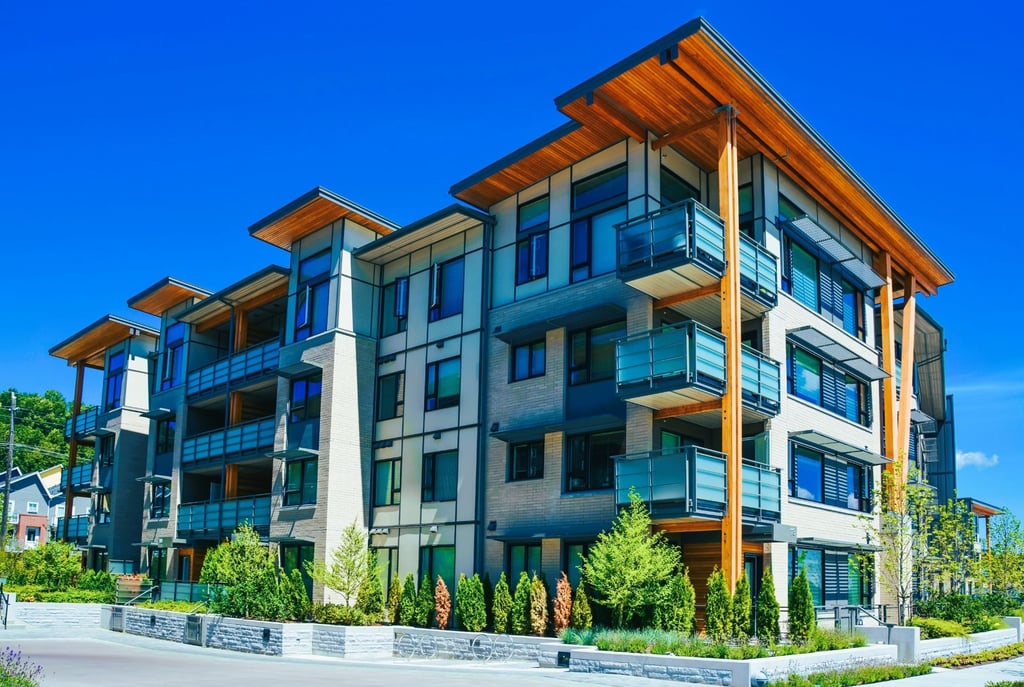

Canada’s Spring Economic Update 2026 – Canada Strong for All makes one point clear for the construction industry: housing supply is no longer being treated only as a social policy issue. It is now positioned as a national economic priority.
For builders, developers, modular manufacturers, prefabricated construction companies, and housing-sector investors, the strongest near-term opportunities appear to be concentrated in two areas: rental and affordable housing delivery, and factory-built, modular, and prefabricated construction.
Housing Supply Is Moving to the Centre of Federal Policy
The update states that Canada is focused on building “the major infrastructure, homes, and industries” needed to support long-term prosperity. It also says the government is advancing progress on more affordable homes and major infrastructure that can transform and connect the economy.
For the housing sector, the policy signal is direct: Canada wants more homes built faster, with a stronger focus on affordability, construction productivity, and scalable delivery models.
This matters because the document also identifies a clear market risk. While home prices and asking rents have eased, the government states that too many Canadians still struggle to find homes they can afford, and that the current market adjustment could create risk for future housing supply.
The practical conclusion is straightforward: Canada needs more housing supply, but it also needs delivery models that can reduce cost, compress timelines, and maintain construction capacity through market volatility.
Opportunity 1: Rental Housing and Affordable Housing Delivery
Rental housing is one of the clearest opportunity areas in the update.
The government proposes to accelerate more than CAD 7 billion in low-cost loans under the Apartment Construction Loan Program to speed up construction of up to 16,500 new rental homes.
This creates a near-term opportunity for developers, general contractors, construction managers, lenders, housing operators, and suppliers that can deliver viable rental projects at scale.
The update also points to strong momentum in purpose-built rental construction. It states that rental starts reached about 120,000 units in 2025, roughly five times the 2000 to 2019 average, and that federal incentives and financing support contributed to that strength.
For the construction industry, this suggests that rental housing is likely to remain one of the more active parts of the residential market, especially where projects can align with federal financing, provincial programs, municipal approvals, and affordability objectives.
Affordable housing is also a priority. The update states that Build Canada Homes has committed to supporting thousands of new housing units through partnerships with Ottawa, Nova Scotia, New Brunswick, British Columbia, Nunavut, Quebec, and six federal properties expected to break ground in 2026.
This creates a second channel of opportunity: public-sector and partnership-driven housing delivery. Companies that understand public procurement, non-profit housing, affordable rental economics, land partnerships, and rapid delivery models will be better positioned than firms relying only on conventional private-market development.
Opportunity 2: Factory-Built, Modular, and Prefabricated Construction
The second major opportunity is factory-built housing.
The update includes CAD 42 million to enable factory-built housing, make homebuilding more efficient and innovative, and improve the responsiveness of housing markets.
The document also states that the government is focused on accelerating the review and approval processes for innovative and prefabricated construction products, expanding building codes to support more flexible building options, including engineered wood, and strengthening analysis of building code and standards changes to better assess cumulative cost impacts on housing affordability.
This is significant. The federal government is not simply encouraging more conventional construction. It is explicitly connecting housing affordability with construction innovation, code modernization, product approvals, and factory-built delivery.
For modular, panelized, prefabricated, mass timber, and other industrialized construction companies, this is an important market signal. The opportunity is not just to sell components. It is to position factory-built housing as a delivery model for faster, more predictable, and more scalable housing supply.
Build Canada Homes strengthens this signal. The update states that Build Canada Homes is prioritizing modern methods of construction and Canadian building materials, while driving changes in how Canada builds and creating demand for Canadian products.
That creates a direct opening for companies with repeatable housing systems, standardized assemblies, panelized building packages, modular units, prefabricated envelope systems, engineered wood solutions, and integrated design-for-manufacturing approaches.
Why These Two Opportunities Are Connected
Rental housing and factory-built construction should not be viewed separately.
The strongest opportunity sits at the intersection of both: repeatable rental and affordable housing projects that can be delivered through industrialized construction methods.
Rental and affordable housing projects often require predictable cost, faster delivery, repeatable designs, and stronger schedule control. Factory-built and prefabricated construction models are designed to address these exact pressures.
The update’s policy direction reinforces this fit. It links housing supply, affordability, financing, modern methods of construction, Canadian materials, and faster approvals into the same strategic agenda.
For companies in this space, the strongest positioning is likely to be:
We deliver scalable rental and affordable housing using modern, factory-built construction methods that help Canada build faster, reduce pressure on affordability, and strengthen domestic construction capacity.
Strategic Implications for Industry
For construction-sector companies, the update points to several practical moves.
First, developers and builders should assess which projects can qualify for rental housing financing, public housing partnerships, or affordability-linked programs.
Second, factory-built and modular companies should move beyond generic claims about speed and sustainability. The stronger commercial message is alignment with Canada’s housing policy priorities: affordability, scalability, code readiness, Canadian materials, and faster project delivery.
Third, suppliers should identify where their products fit into repeatable housing systems, including structural assemblies, building envelope systems, engineered wood, mechanical systems, bathroom pods, kitchen modules, and other components that support industrialized delivery.
Fourth, international companies targeting Canada should recognize that the opportunity is not only market entry. It is local positioning. The update emphasizes Canadian building materials, domestic production, and partnerships, so foreign companies may need Canadian partners, local manufacturing strategies, or project-specific alliances to be credible.
Bottom Line
The Spring Economic Update 2026 – Canada Strong for All creates a clear near-term signal for the construction industry: Canada needs more housing supply, and the most attractive opportunities are likely to be in rental housing, affordable housing, and factory-built delivery.
The strongest market position will belong to companies that can connect all three.
That is where the policy direction is pointing. And for companies that can execute, it is where the near-term opportunity is likely to concentrate.
References
Spring Economic Update 2026 – Canada Strong for All, Government of Canada, April 28, 2026. Uploaded document:

Based in Vancouver, BC, Canada—Astra Pacifica Inc. specializes in B2B business development and consulting services for clients in the construction, manufacturing, and industrial sectors.