
Canada's Residential Pipeline Is Holding — But Only One Segment Is Doing the Heavy Lifting (April 2026)
Statistics Canada (Report for February 2026 released in April 2026) . Canada's current housing pipeline: multi-unit development has become the load-bearing element of residential permit activity.
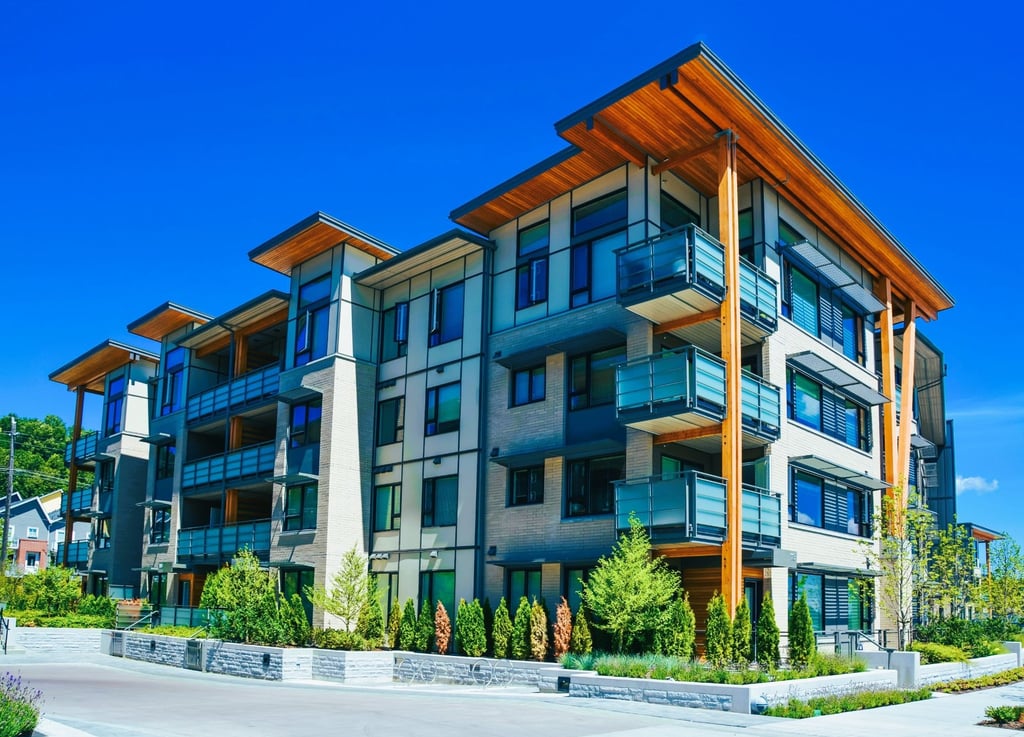

Canada's Residential Pipeline Is Holding — But Only One Segment Is Doing the Heavy Lifting
February 2026 building permit data reveals a structurally significant shift: residential construction intentions rose $135.6 million to $8.1 billion, driven almost entirely by multi-unit housing. The headline decline in total permits masks an underlying resilience that carries meaningful implications for developers, lenders, and policymakers.
01 — The Headline Number Is Misleading. Look Beneath It.
Total building permit value declined in February. That is the number that typically draws attention. But total permit value aggregates residential and non-residential activity into a single figure — and when non-residential contracts, it can overwhelm genuine strength in housing. That is precisely what happened here.
Residential permits not only held their ground — they advanced. The net gain of $135.6 million represents a positive signal in the most supply-sensitive segment of the Canadian construction market. Reading the headline alone would lead to the wrong conclusion.
A decline in total permit value does not indicate a deteriorating residential pipeline. In February 2026, residential construction intentions strengthened even as aggregate figures fell — a distinction that matters for anyone making supply or investment decisions based on permit data.
02 — Multi-Unit Is Not Just Growing. It Is Carrying the Entire Residential Sector.
The $180.3 million gain in multi-unit permits is not simply larger than the $44.7 million single-family decline — it is more than four times larger. This ratio reflects a structural reality in Canada's current housing pipeline: multi-unit development has become the load-bearing element of residential permit activity.
February 2026 — Component Decomposition
Multi-unit change: +$180.3M
Single-family change: −$44.7M
Net residential gain: +$135.6M
Multi-unit share of residential: 67%
This pattern is not new. December data showed a comparable structure — multi-unit gains of $653.2 million against a single-family decline of $119.7 million. February confirms that this is not an anomaly. It is the prevailing architecture of Canadian residential construction intentions.
03 — Single-Family Weakness Is a Moderating Force, Not a Crisis Signal
The $44.7 million decline in single-family permits is real and should not be dismissed. But context is essential. Single-family activity represents one-third of total residential permit value in February. Its contraction tempered — but could not reverse — the gains generated in the multi-unit segment.
The more consequential observation is that residential growth, in the current environment, is entirely conditional on multi-unit performance. If multi-unit permits had been flat in February, the residential sector would have posted a decline. That dependency is a structural feature of the pipeline, not a temporary anomaly.
Bottom Line
Residential construction intentions rose $135.6 million to $8.1 billion in February 2026 — even as total permits declined.
Multi-unit housing drove the entire gain (+$180.3M), while single-family permits declined (−$44.7M) and partially offset it.
Multi-unit now accounts for 67% of residential permit value and is the sole growth driver in the current pipeline.
Total permit headlines mask sector-level strength. Decision-makers should disaggregate before drawing conclusions.
Source: Statistics Canada — Building Permits, February 2026 data.
North American commercial development for international construction, manufacturing, and industrial companies.